
How to Say Thank You in Sri Lanka: A Complete Sinhala & Tamil Guide

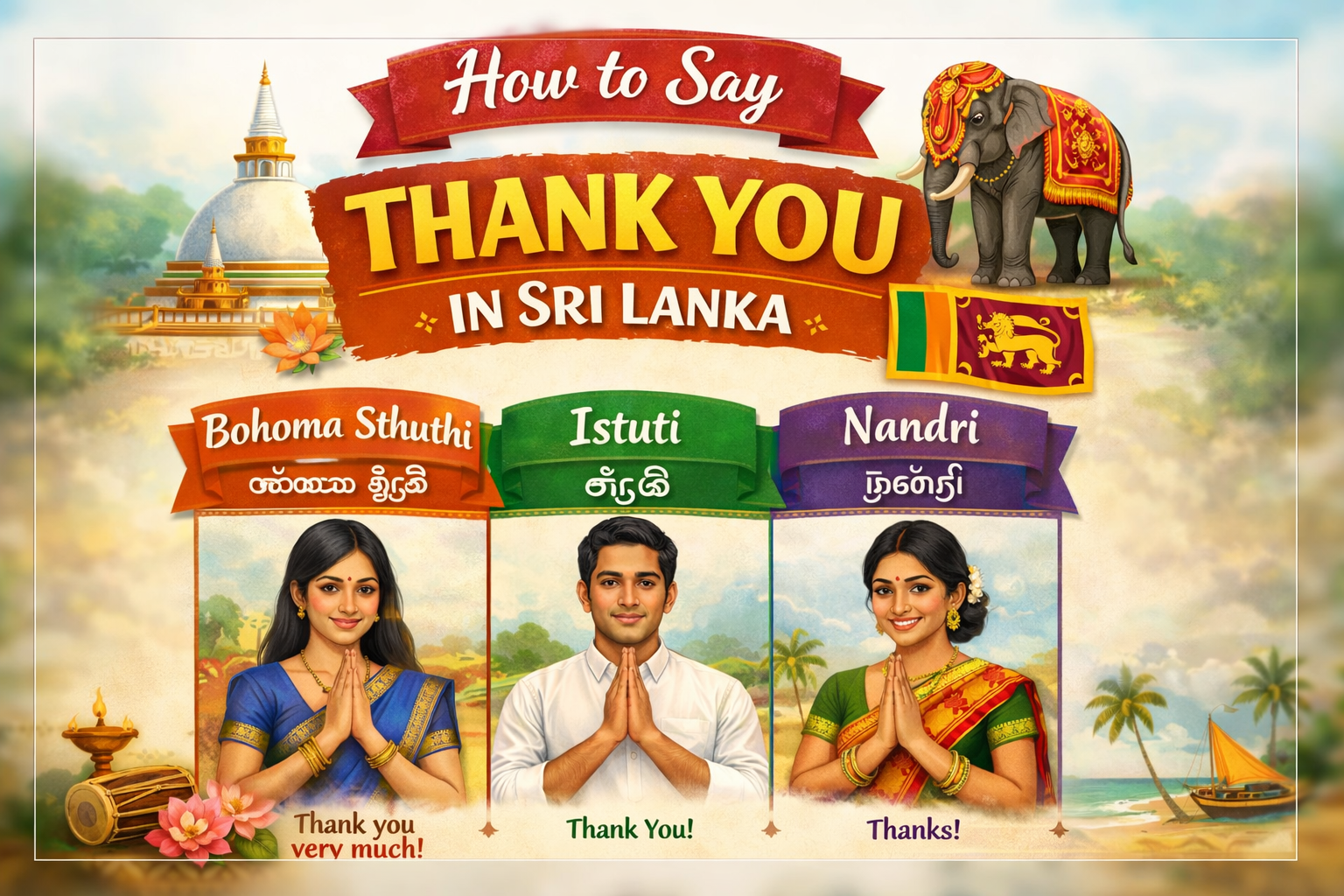
If you’re traveling to Sri Lanka or connecting with Sri Lankan culture, knowing how to say thank you in Sri Lanka is one of the most meaningful gestures you can make. Sri Lanka has two official languages — Sinhala and Tamil — and locals deeply appreciate when visitors make even a small effort to speak their language. This guide gives you the exact words, correct pronunciation, and cultural context to express gratitude authentically.
The Two Official Languages of Sri Lanka
Sri Lanka is a bilingual nation. Sinhala is spoken by roughly 74% of the population, primarily among the Sinhalese ethnic group. Tamil is spoken by about 18% of the population, including Sri Lankan Tamils and Indian Tamils, mainly in the Northern and Eastern provinces. English is widely understood in urban areas and the tourism industry, but speaking even a word of Sinhala or Tamil signals genuine respect.
How to Say Thank You in Sinhala
The standard way to say thank you in Sinhala is:
ඉස්තුතියි — Istutiy (pronounced: is-too-tee)
- Formal version: Bohoma istutiy (බොහොම ඉස්තුතියි) — meaning “Thank you very much”
- Casual version: Istutiy — used comfortably in everyday situations
- Very informal: Thoo-baa — used among close friends, not appropriate for strangers or elders
Pronunciation Breakdown
| Phrase | Phonetic | Meaning |
|---|---|---|
| Istutiy | is-too-tee | Thank you |
| Bohoma istutiy | bo-HO-ma is-too-tee | Thank you very much |
| Bohoma pin | bo-HO-ma pin | Much merit (spiritual thank you) |
Bohoma pin is a traditional expression used after someone performs a kind or generous act. It carries a Buddhist undertone of wishing the person spiritual merit — a deeply meaningful thing to say in Sri Lanka, where Theravada Buddhism shapes daily life for the majority.
How to Say Thank You in Tamil
In the Northern and Eastern regions of Sri Lanka, Tamil is the dominant language. The word for thank you in Tamil is:
நன்றி — Nandri (pronounced: nan-dree)
- Formal: Romba nandri (ரொம்ப நன்றி) — “Thank you very much”
- Everyday: Nandri — works in most situations
Tamil spoken in Sri Lanka is similar to Indian Tamil but carries distinct local vocabulary and accent patterns. If you’re visiting Jaffna, Trincomalee, or Batticaloa, using nandri will be warmly received.
Cultural Context: Why Saying Thank You the Right Way Matters
Knowing how to say thank you in Sri Lanka goes beyond language — it signals cultural awareness. Here are key etiquette points every visitor should understand:
- The Ayubowan gesture: Often paired with a verbal thank you, this involves pressing your palms together in front of your chest and slightly bowing your head. It means “may you live long” and serves as both a greeting and an expression of gratitude.
- Elders receive formal language: Always use the more formal bohoma istutiy or romba nandri with older people. Using overly casual language with elders is considered rude.
- Smiling matters: Sri Lankan culture places high value on warmth. A genuine smile accompanying your thank you carries significant social weight.
- Religious settings: In temples and sacred spaces, bohoma pin is particularly appropriate. It acknowledges the spiritual dimension of the interaction.
Quick Reference: Sri Lanka Thank You Phrases
| Situation | Sinhala | Tamil |
|---|---|---|
| Standard thank you | Istutiy | Nandri |
| Strong thank you | Bohoma istutiy | Romba nandri |
| Spiritual/merit-based | Bohoma pin | Punniyam |
| Greeting + thanks | Ayubowan + istutiy | Vanakkam + nandri |
Beyond Thank You: Essential Polite Phrases for Sri Lanka
Once you’ve mastered how to say thank you in Sri Lanka, these companion phrases will complete your toolkit:
- Hello (Sinhala): Ayubowan
- Hello (Tamil): Vanakkam
- Please (Sinhala): Karunakara
- Sorry / Excuse me (Sinhala): Samaavenna
- Yes / No (Sinhala): Ow / Naa
- How much? (Sinhala): Keeyada?
Even knowing three or four of these phrases will dramatically change how locals interact with you. Sri Lankans are known for their hospitality — a quality called atithidevo bhava in the broader South Asian tradition — and your linguistic effort will almost always be met with delight and enthusiasm.
A Real-World Example
Travel writer and South Asia specialist Lena Hartmann, who has spent over four years documenting Sri Lankan culture, notes that in her experience, visitors who attempt even basic Sinhala phrases are treated markedly differently: locals open up faster, offer more genuine recommendations, and frequently go out of their way to help. “The words don’t have to be perfect,” she writes. “The intention behind them is what Sri Lankans respond to.”
This reflects a broader truth about language and travel: fluency is never required. Effort is.
Common Mistakes to Avoid
- Don’t substitute English “thanks” in formal situations. While English is understood, defaulting to it in local markets, temples, or rural areas can come across as indifferent.
- Don’t mispronounce istutiy as “is-TOO-tee-ya.” The ending is clipped — is-too-tee — no extra syllable.
- Don’t use Tamil phrases in predominantly Sinhala areas and vice versa without context. While most Sri Lankans won’t be offended, using the regionally appropriate language shows a higher level of awareness.
Conclusion
Learning how to say thank you in Sri Lanka — istutiy in Sinhala and nandri in Tamil — is one of the simplest and most powerful things you can do before visiting or engaging with Sri Lankan culture. These aren’t just words; they’re a bridge into a society built on warmth, community, and deep hospitality. Add the Ayubowan gesture, observe the cultural nuances around formality and age, and you’ll leave a lasting impression wherever you go.
Sri Lanka rewards respectful visitors. A sincere bohoma istutiy will take you further than any guidebook.
FAQ — People Also Ask
Q1: What is the most common way to say thank you in Sri Lanka? The most common phrase is istutiy (ඉස්තුතියි) in Sinhala and nandri (நன்றி) in Tamil. For a stronger expression of gratitude, use bohoma istutiy in Sinhala or romba nandri in Tamil.
Q2: How do you pronounce “istutiy” in Sinhala? It is pronounced is-too-tee. The stress falls on the second syllable. Avoid adding an extra vowel sound at the end.
Q3: Is English commonly understood in Sri Lanka? Yes, English is widely spoken in urban areas, hotels, and the tourism industry. However, using local phrases like istutiy or nandri is appreciated and often elicits a warmer response from locals.
Q4: What does “Bohoma pin” mean in Sri Lanka? Bohoma pin (බොහොම පින්) means “much merit” and is used as a heartfelt thank you, particularly in Buddhist cultural contexts. It is more spiritually resonant than a standard thank you and is appropriate after acts of generosity or kindness.
Q5: Should I use Sinhala or Tamil to say thank you in Sri Lanka? It depends on the region. Sinhala is spoken across most of the island, especially in the South, West, and Central provinces. Tamil is dominant in the Northern and Eastern provinces. When in doubt, Sinhala is the safer default — but if you know you’re in a Tamil-speaking area, nandri will be especially appreciated.